
By Jordan Summervill

Stability in the Labor Market Is Changing How Financial Institutions Compete for Talent
The labor market in 2026 has settled into a more stable and predictable environment, giving banks and credit unions greater clarity in workforce planning and compensation strategy. Hiring activity has moderated, wage growth has normalized, and turnover remains manageable across much of the financial services industry. However, stability does not mean the talent market has become easy. Instead, financial institutions are operating in a labor market where hiring decisions are more deliberate, employee expectations are evolving, and competition remains concentrated in specialized roles.
National unemployment remains in the mid 4% range, while unemployment in financial services continues to track lower, reflecting the sector’s relatively strong demand for experienced talent. Job openings have continued to decline from their peak in 2022 but remain above long-term historical norms, and quit rates have stabilized at lower levels than in many other industries. For banks and credit unions, this has created a more balanced hiring environment. One where aggressive bidding wars have largely subsided, but filling key positions still requires competitive compensation and strong organizational alignment. Roles in compliance, risk management, cybersecurity, commercial lending, and data analytics continue to face elevated competition, particularly as financial institutions accelerate investments in technology and regulatory infrastructure. We’ve also seen accelerated salary movement for accounting over the last few years.
Employee retention remains a relative strength across the banking industry, with turnover rates holding below historical averages. However, workforce stability should not be mistaken for employee complacency. Many employees, particularly younger professionals and mid-career talent, are becoming increasingly open to exploring external opportunities when they offer stronger career progression, compensation growth, or workplace flexibility. This creates a more nuanced retention challenge for HR leaders. The risk in 2026 is not widespread turnover, but selective turnover – losing high-performing employees in critical positions where replacement costs and institutional knowledge loss can be significant. As a result, retention strategies are becoming more proactive, with organizations focusing on internal mobility, career development, and targeted pay adjustments before turnover risk materializes.
What’s Changing?
Compensation trends have also become more disciplined. Salary increase budgets have largely normalized into the 3% to 4% range, reflecting a return to more traditional compensation planning practices. However, these increases are no longer being applied as broadly or uniformly. Instead, financial institutions are taking a more targeted approach, prioritizing pay investments for high-performing employees, market-sensitive positions, and areas where compression or equity concerns have emerged. Findings from the 2025-2026 BalancedComp Salary & Incentive Survey support this trend, showing that while over half of participating institutions planned off-cycle salary adjustments, the vast majority of those adjustments were focused on specific employees or strategically important roles rather than broad workforce-wide increases.
This shift reflects a broader change in how compensation strategy is being managed. Rather than asking how much it takes to hire talent in a competitive market, HR leaders are increasingly focused on where compensation dollars will have the greatest organizational impact. Market pricing, internal equity, and retention risk are now more closely connected than they have been in recent years. For banks and credit unions, this means the compensation strategy must be increasingly precise. Institutions that fail to monitor market competitiveness or address compression issues may find themselves vulnerable to retention challenges, even in a more stable labor market.
Looking Ahead
Workforce planning is also becoming more strategic. Many financial institutions are maintaining relatively stable staffing levels while selectively adding talent in growth-oriented or risk-sensitive areas. According to the BalancedComp Survey, over half of participating organizations planned to maintain current staffing levels, while approximately 40% expected modest headcount growth. At the same time, workplace flexibility continues to evolve. Hybrid work arrangements have become more common and increasingly expected, while fully remote hiring remains limited across much of the banking industry. Nearly 60% of survey participants indicated they do not hire remote employees, reinforcing the continued importance of local labor markets and regional compensation competitiveness.
For HR leaders, the labor market in 2026 presents a different type of challenge than in recent years. The urgency of widespread hiring pressure has eased, but the need for a disciplined compensation strategy has not. Pay compression, selective turnover, and specialized talent shortages remain meaningful risks, particularly as competition intensifies in digital banking, fraud prevention, data strategy, and compliance. Success in this environment will depend on maintaining market awareness, investing strategically in talent, and ensuring compensation practices support both retention and long-term organizational goals.
The labor market may be more stable, but talent strategy remains a competitive advantage. For banks and credit unions, the institutions best positioned for success in 2026 will be those that approach compensation and workforce planning with precision, flexibility, and a clear understanding of where talent investments matter most.
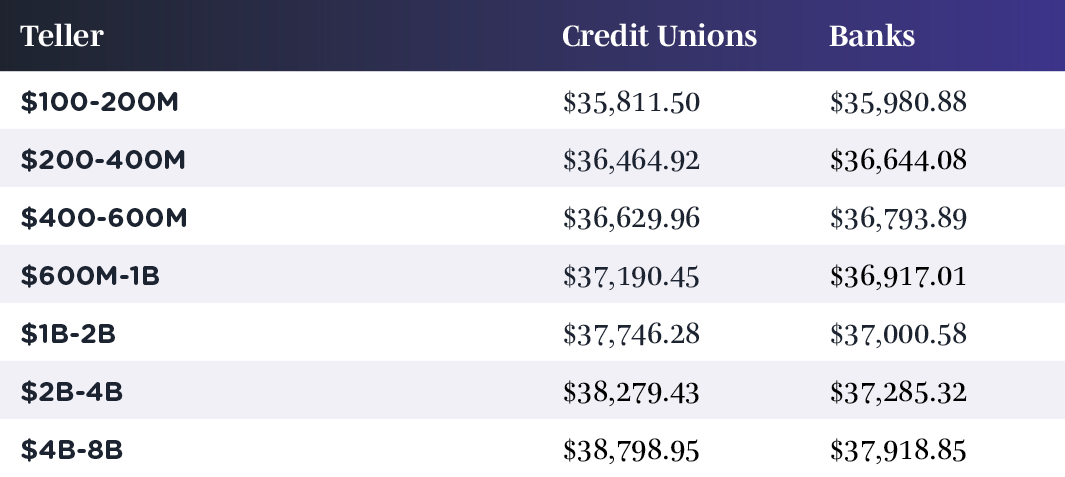
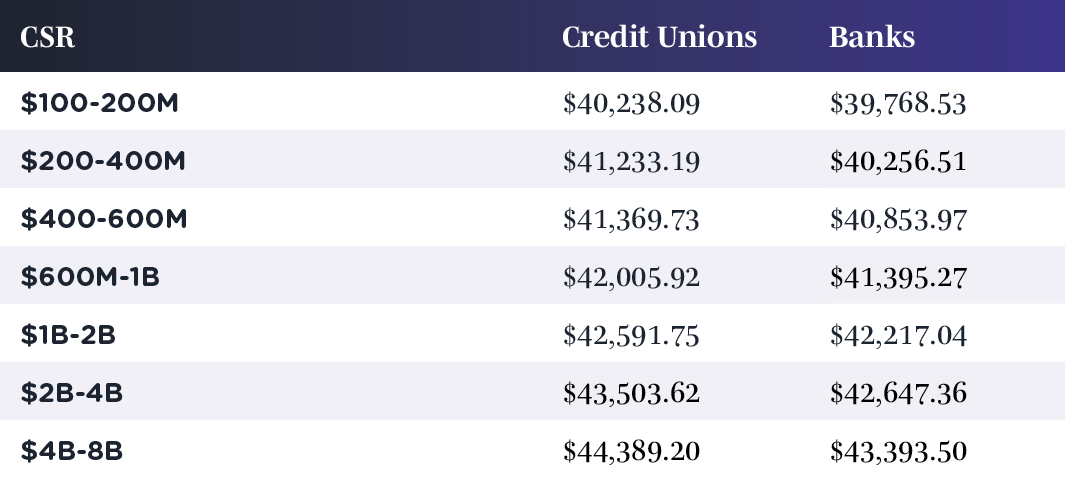
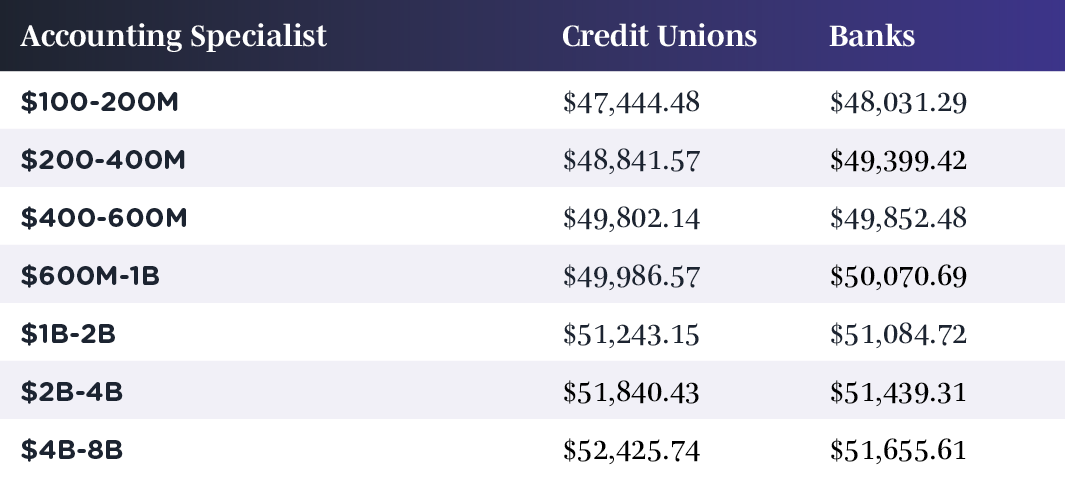
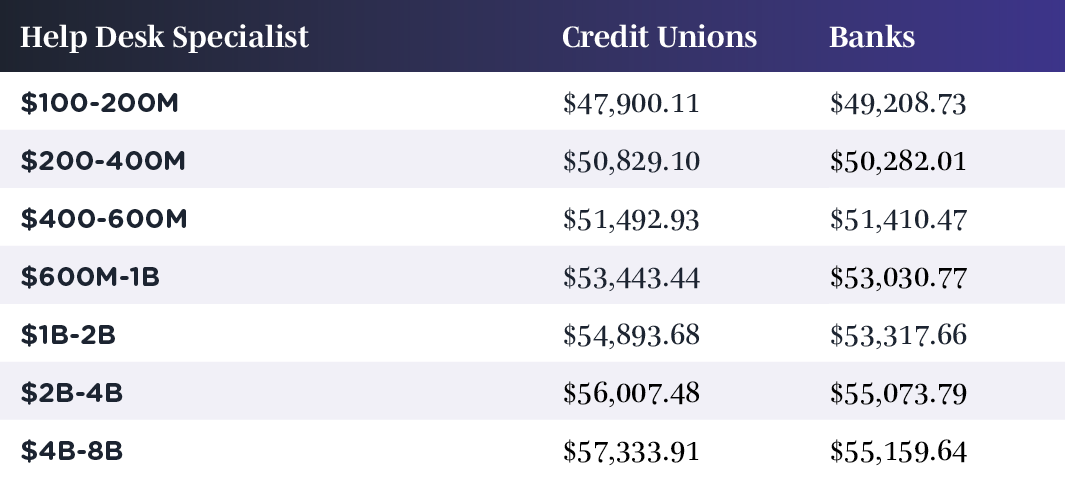
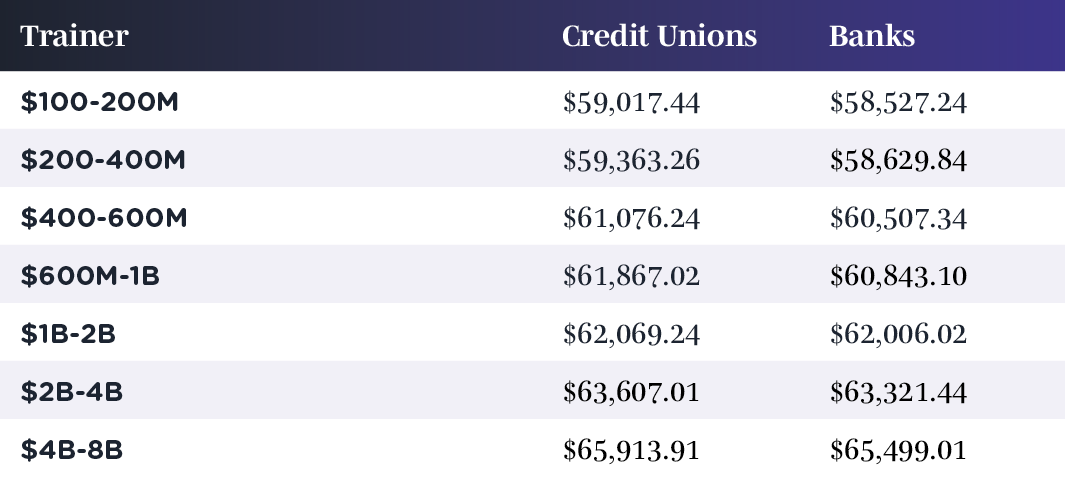
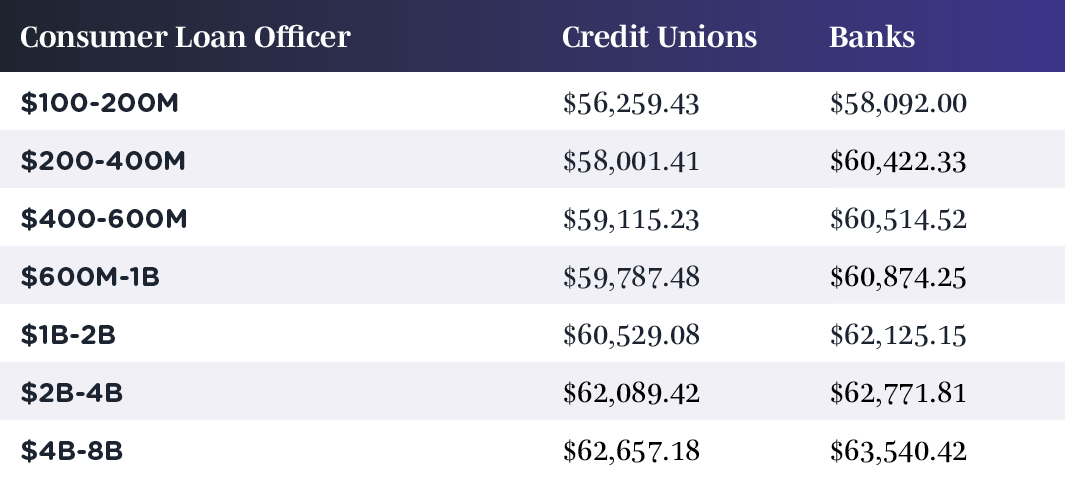
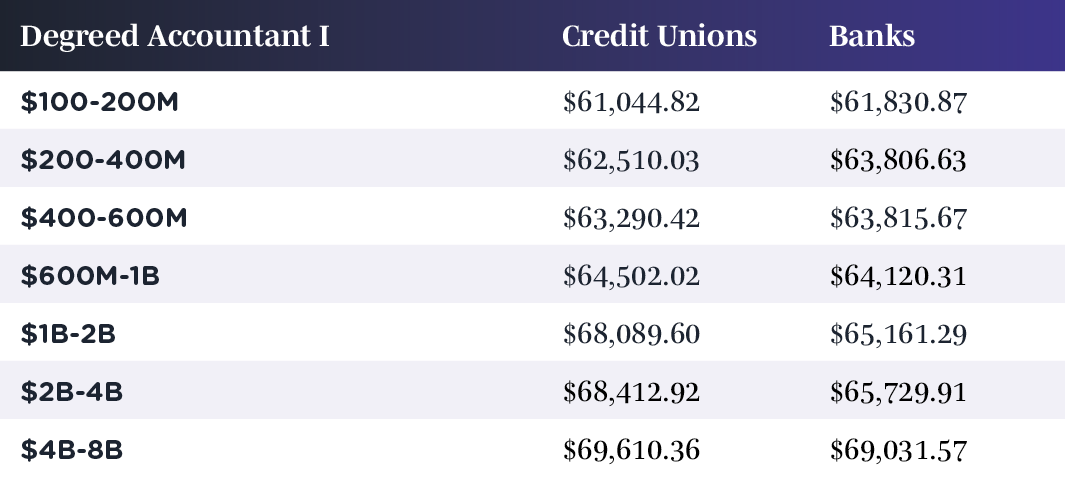
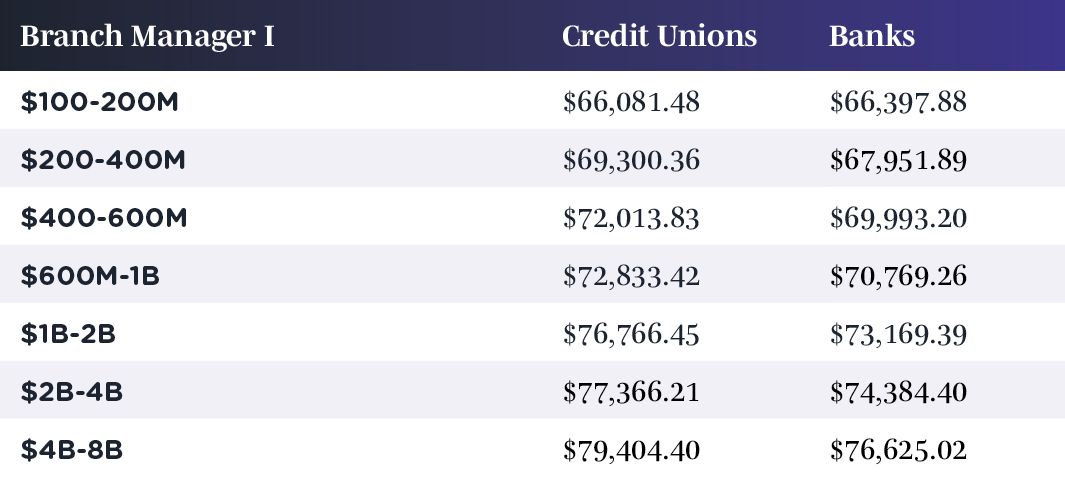
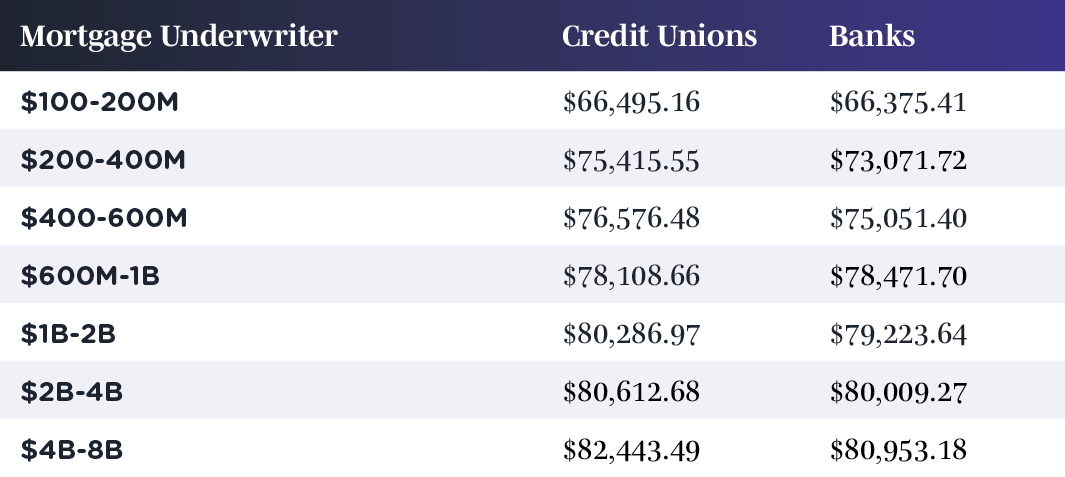
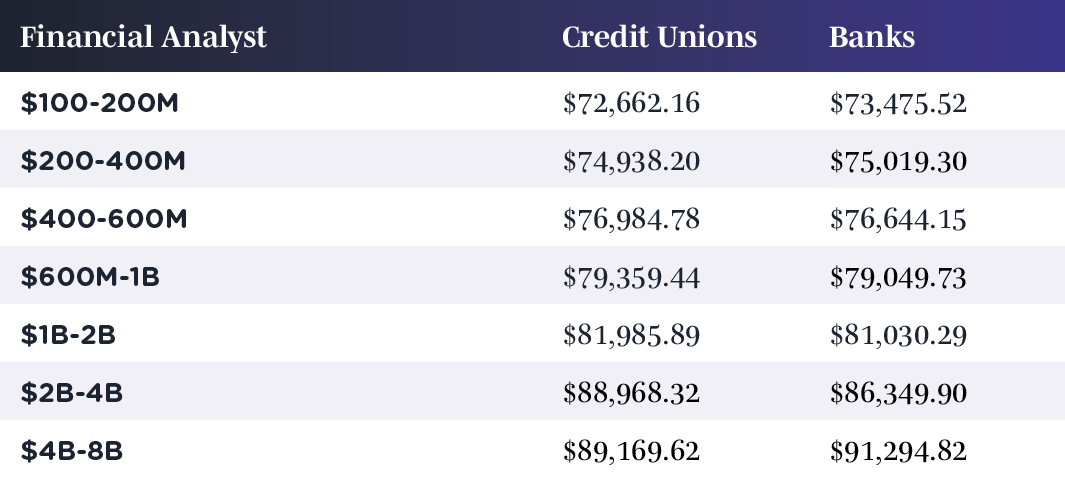
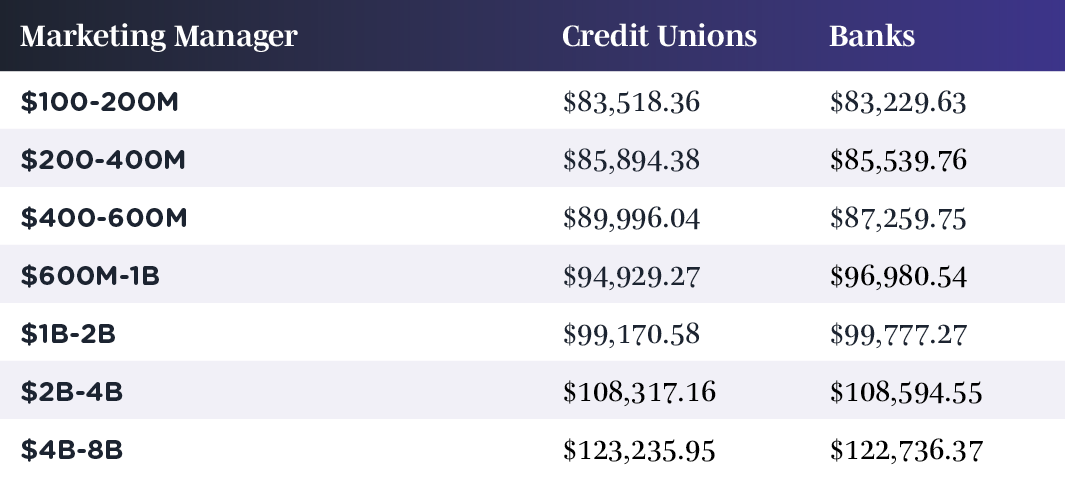
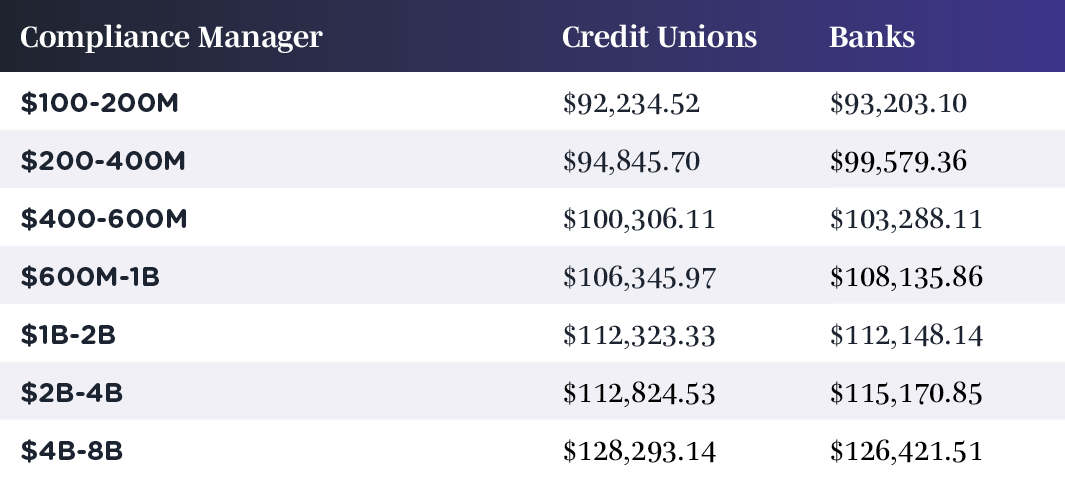
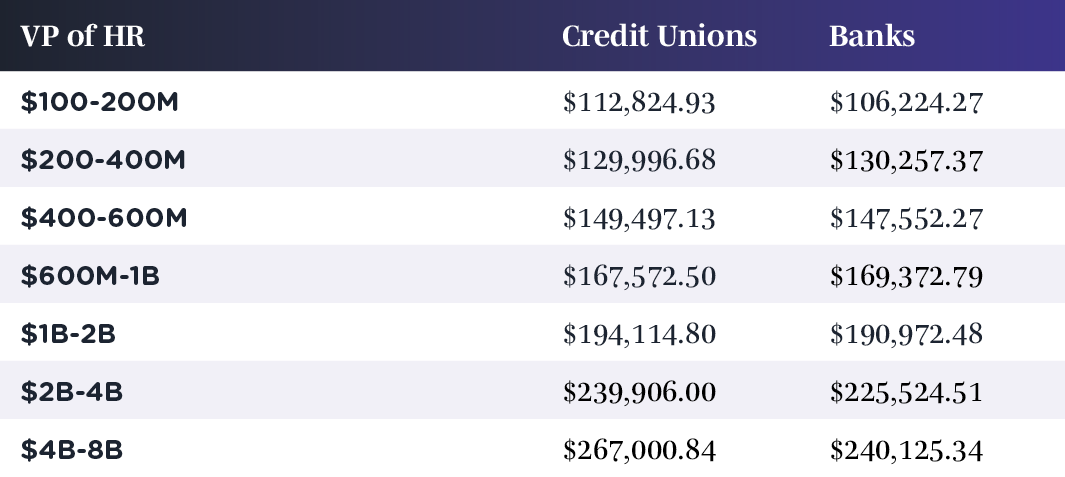
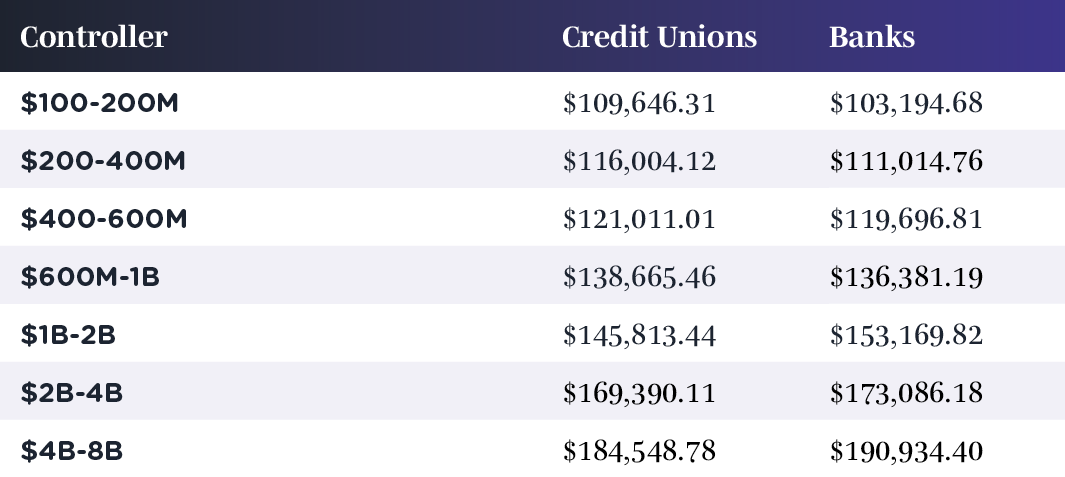
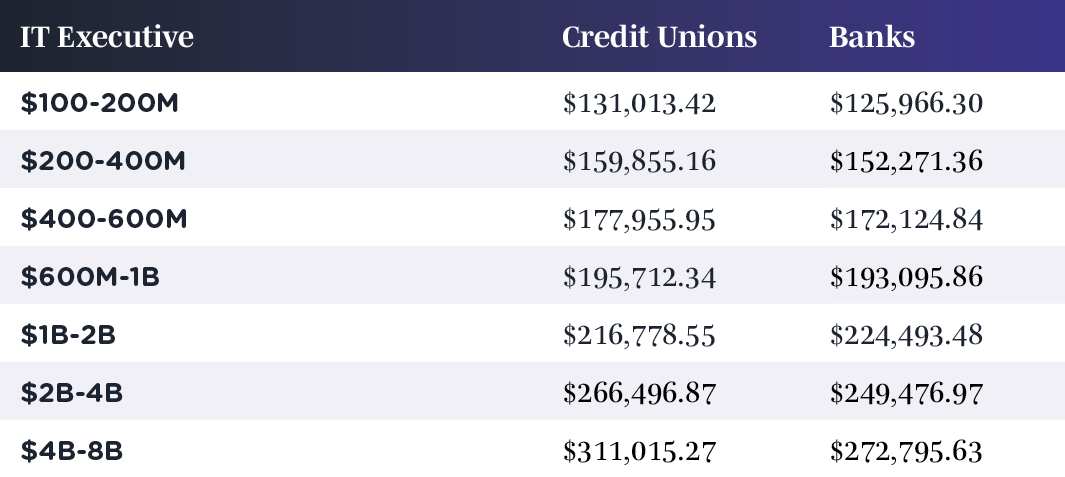
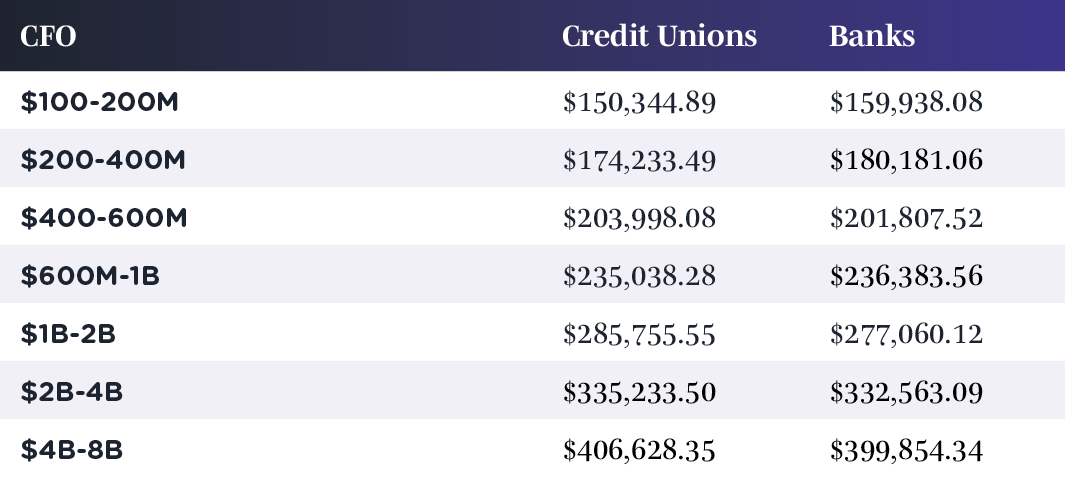
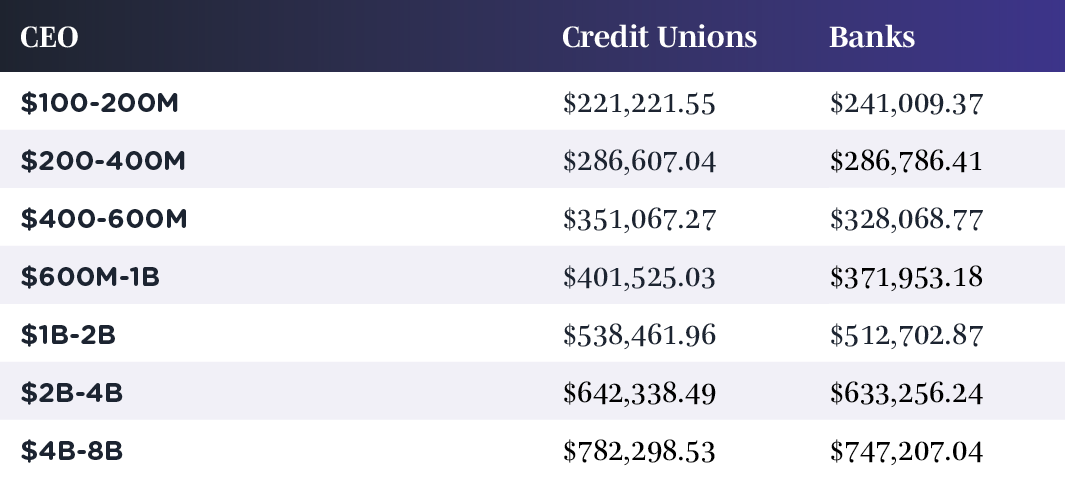
Below are the national averages for 17 common positions in financial institutions:
These averages have been trended to 7/1/26. To tailor the midpoints to your specific market, these salaries must be multiplied by your geographic wage differential (geo%). Although this compensation methodology is the definitive way to establish an organization’s salary ranges, it does not ensure a job-ready workforce for your area of the country.
How You Can Make a Difference
We produce accurate, timely data and valuable insights through annual salary-range benchmarking. One of our most reliable sources of data comes from our in-house, proprietary surveys.
We invite you to participate in the new BalancedComp 2026-2027 Salary & Incentive Survey for financial institutions, which will be open from March 25 through July 15, 2026. Participation is free and confidential, and if you do so in advance, you will receive $600 off the final price of the survey when it is published in September 2026.
Back to Blog